Contact us

Launch and Scale in Luxembourg, Liechtenstein and Switzerland with Clear Rules and Stable Regulation
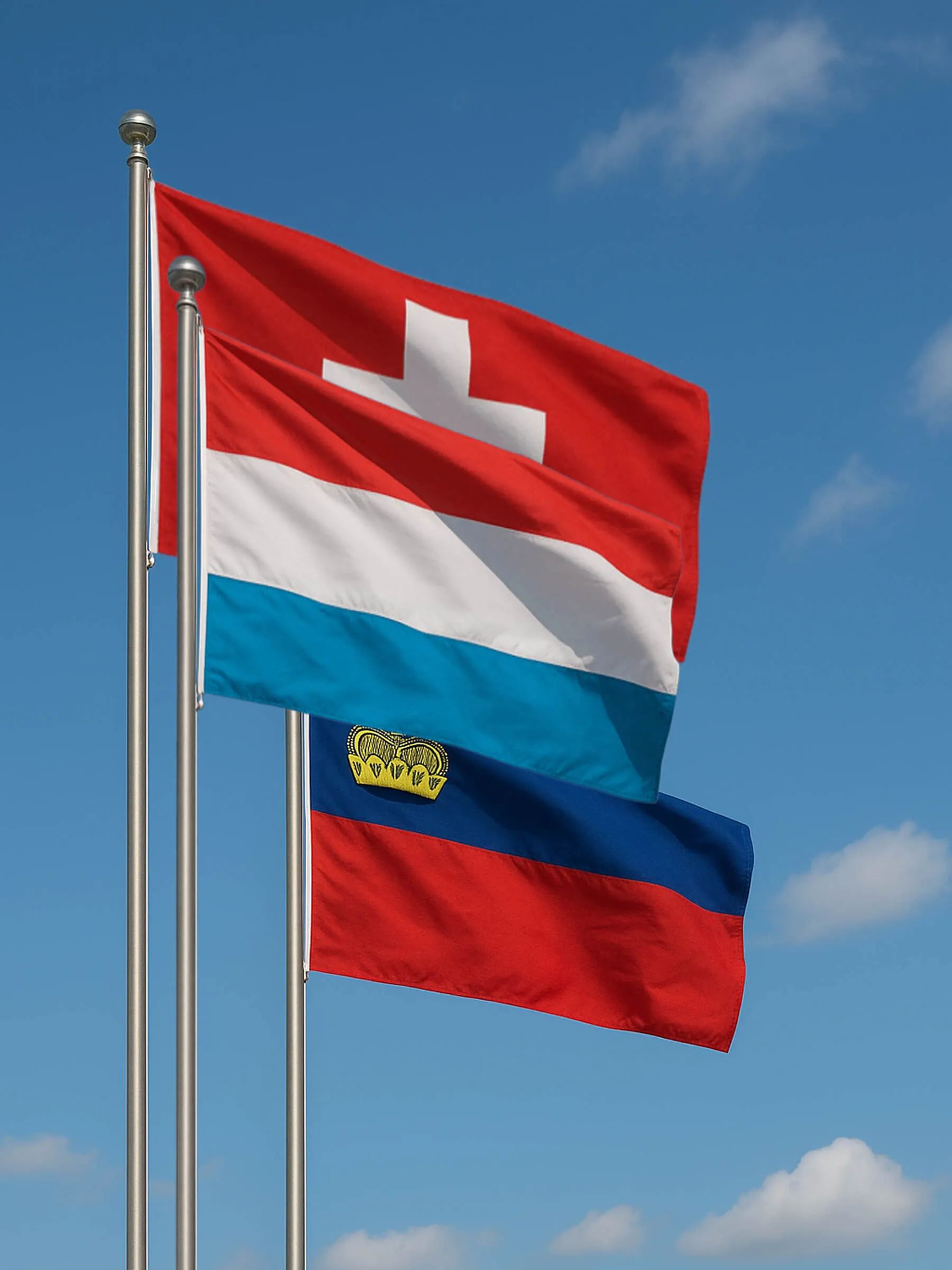
Digital Lawyers service Luxembourg, Liechtenstein & Switzerland flag

Digital Lawyers helps startups, founders, fund managers and international businesses establish companies and investment structures in Luxembourg, Liechtenstein and Switzerland. These jurisdictions are commonly considered for holding companies, investment funds, fintech and crypto businesses, tokenisation projects, protocol foundations and cross-border investments.

Luxembourg provides an established EU fund and MiCA framework. Liechtenstein combines EEA market access with MiCAR and its Token and Trusted Technology Service Provider Act. Switzerland offers a separate regulatory environment for fintech, digital assets and distributed ledger technology, with FINMA supervision where regulated activities are involved.

We compare corporate structures, licensing requirements, tax and substance considerations, banking access and investor expectations before recommending a practical jurisdiction. Working with qualified local lawyers, fiduciaries and corporate service providers, we coordinate company formation, regulatory filings and ongoing compliance while remaining your main point of contact.

Book Free Consultation

Crypto, Fintech and Investment Structures in Luxembourg, Liechtenstein and Switzerland

Table of contents
  • Luxembourg Company and Fund Structuring under MiCA
  • Liechtenstein MiCAR, TVTG and Tokenisation Structures
  • Switzerland Fintech, DLT and Protocol Foundations
  • Choosing the Right Jurisdiction
1.

Luxembourg Company and Fund Structuring under MiCA

Luxembourg is an established EU centre for investment funds, holding companies, fintech businesses and regulated crypto-asset services. The CSSF authorises Crypto-Asset Service Providers under MiCA, allowing authorised services to be passported across the European Union.

Luxembourg is commonly considered for RAIF, SIF, SICAV and SCSp fund structures, tokenised investment products, payment and e-money businesses and international holding structures. The appropriate vehicle depends on the investment strategy, target investors, regulatory status and required local substance.

A standard company established in Luxembourg City with taxable income above €200,000 is generally subject to a combined corporate tax rate of approximately 23.87%. Eligible Luxembourg companies may also benefit from EU rules governing intra-group dividends, interest and royalties, as well as Luxembourg’s extensive tax treaty network, subject to applicable eligibility, substance and anti-abuse requirements. The jurisdiction is supported by a well-established fund administration, banking and professional services ecosystem.

2.

Liechtenstein MiCAR, TVTG and Tokenisation Structures

Liechtenstein is a member of the European Economic Area and applies MiCAR through its national implementation legislation. CASPs are authorised by the Financial Market Authority Liechtenstein and may passport their approved crypto-asset services across the EEA.

The national Token and Trusted Technology Service Provider Act continues to apply to certain activities outside the scope of MiCAR. Its technology-neutral framework may be relevant for tokenisation projects, digital ownership structures and services involving tokens not regulated under MiCAR.

Liechtenstein applies a flat 12.5% corporate income tax on taxable net profits, subject to a minimum annual corporate tax of CHF 1,800. Dividends and capital gains from qualifying shareholdings may be excluded from taxable income, although anti-abuse and low-tax rules must be considered. The standard VAT rate is 8.1%, and Liechtenstein and Switzerland form a common VAT territory.

Liechtenstein may also be suitable for foundations, family-office structures and international businesses seeking an EEA base with established corporate and wealth-planning vehicles.

3.

Switzerland Fintech, DLT and Protocol Foundations

Switzerland is outside the EU and EEA and operates its own regulatory framework for fintech, blockchain and digital assets. Depending on the business model, FINMA licensing, AML supervision or other financial-market requirements may apply.

Swiss law recognises ledger-based securities and provides a licensing framework for DLT trading facilities. Switzerland is frequently considered for technology operating companies, protocol foundations, non-profit associations, token issuers and blockchain infrastructure projects.

A Swiss structure does not provide MiCA passporting rights, so the location of clients, target markets and cross-border activities should be reviewed before implementation.

4.

Choosing the Right Jurisdiction

The right jurisdiction depends on more than tax rates or market reputation. We compare:

(a) the proposed products, services and token model;

(b) the location of founders, employees, clients and investors;

(c) licensing and regulatory requirements;

(d) fundraising and investor expectations;

(e) tax residence and economic substance;

(f) capital, governance and local-presence requirements;

(g) banking and payment-account access; and

(h) formation costs and ongoing compliance obligations.

This helps create a corporate structure that is practical for day-to-day operations and understandable to investors, banks and regulators.

Let’s Build Your Global Legal Foundation

Get in Touch

*Required Fields
Enter your name in English (no spaces)
Enter your last name in English (no spaces)
Enter your email address
Enter at least 100 characters

FAQ

Why choose Luxembourg for crypto and funds?

Luxembourg offers a fully EU-passportable regime for funds, fintech, and crypto asset services under MiCA. It is ideal for tokenised or crypto-exposed funds (RAIF, SIF, SICAV, SLP), regulated payment and e-money businesses, and MiCA-authorised exchanges and custodians targeting EU investors.

What are Luxembourg’s key tax and regulatory features?

Corporate taxpayers face an effective rate around 25%. The CSSF supervises CASPs, and Luxembourg provides full access to EU directives and a dense fund administration and banking ecosystem.

Why choose Liechtenstein for tokenised projects?

Liechtenstein applies the EEA framework with MiCA alignment and offers the Blockchain Act (TVTG), a technology-neutral token container model for custody, exchanges, token issuance, and related services. It is suited for tokenised equity and debt, compliant on-chain registries, custody entities, and Web3 family office projects.

What are Liechtenstein’s tax benefits?

Corporate income is taxed at a flat 12.5%, combined with EEA financial passports and bespoke token legislation for digital-asset businesses.

Why choose Switzerland for crypto operations?

Switzerland has a mature, standalone digital-asset framework. The DLT Act and FINMA token guidance classify tokens, govern custody, and provide clear rules for ledger-based securities, DLT trading facilities, and protocol foundations.

What is Switzerland’s corporate tax range?

Corporate tax depends on the canton: typically 12% to 21% in Zug and Zurich.

Which hub fits my project?

Luxembourg is best for EU-passportable funds and MiCA-regulated exchanges, Liechtenstein for tokenised structures and family office Web3 projects, and Switzerland for protocol foundations, non-profit associations, and operating companies with cantonal tax optimisation.

How can Digital Lawyers help?

We guide selection of the right hub, implement the corporate structure, map MiCA, TVTG, or Swiss DLT / FINMA requirements, coordinate local counsel for licensing and registrations, and draft cross-border corporate, token, and governance documentation to make the group bankable and regulator-ready from day one.